
Finding a property in a market with strong growth fundamentals is only half the job.
For investors looking across Canberra and the NSW South Coast, one of the most important questions comes after identifying where to invest: Can you actually afford to hold the property for the long term?
A property might look attractive based on its location, expected capital growth or rental demand. But if it requires hundreds of dollars from your household budget every week, that investment can quickly become difficult to sustain.
That is why understanding property cash flow before purchasing is so important.
A recent iStrategic client provides a useful real-world example of how we assess the numbers — and why gross rental yield is only the starting point.
A Real Investment Property Cash-Flow Example

Paul engaged iStrategic late last year to identify an investment property that could provide strong cash-flow characteristics while still being located in an area with solid long-term growth fundamentals.
The property also needed to fit within his available borrowing capacity.
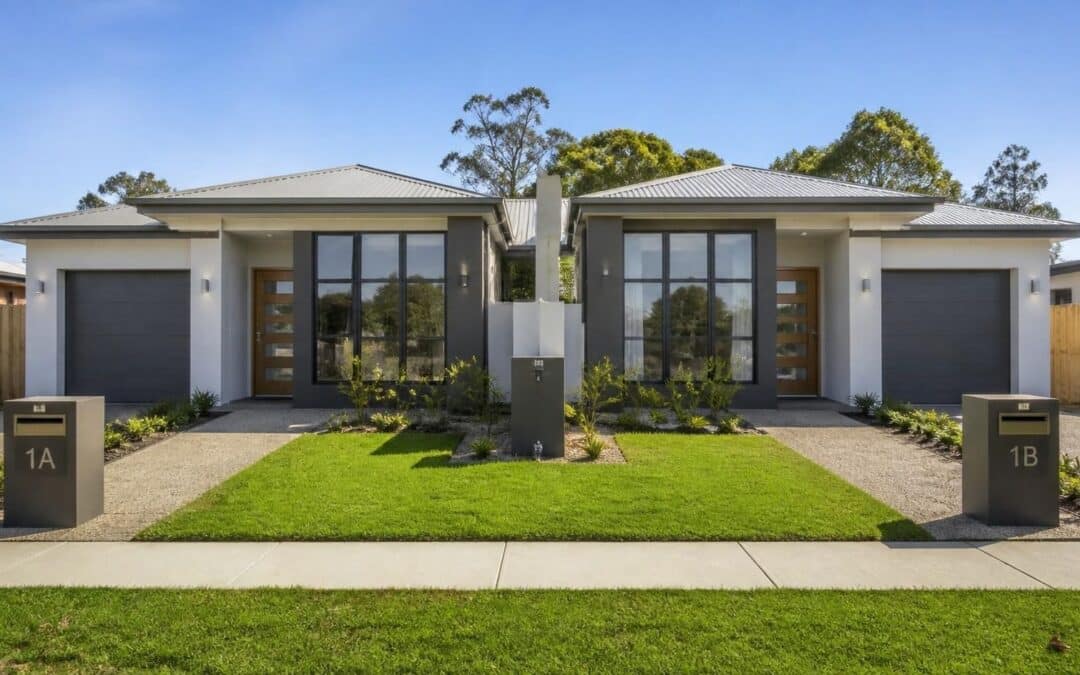
After assessing his circumstances and the available opportunities, the strategy selected was the purchase of land and construction of a dual-key investment property.
Dual-key properties can be particularly useful for investors focused on cash flow because they allow two rental income streams to be generated from a single property.
They won't be appropriate in every location or for every investor. But when the purchase price, construction cost, rental demand and property design stack up, they can potentially produce attractive rental yields.
Paul's numbers were:
- Land: $276,920
- Fixed-price HIA build contract: $499,129
- Total land and construction cost: $776,049
The original investment feasibility assumed combined rental income of $880 per week.
More recent rental appraisals have been considerably stronger, ranging from approximately $940 to $1,040 per week.
At the lower $940-per-week estimate, the property would generate approximately $48,880 in annual gross rental income.
Against the $776,049 land and construction cost, that's a gross rental yield on cost of approximately 6.3%.
That sounds promising.
But rental yield alone doesn't tell us whether Paul can comfortably afford to own the property.
Gross Rental Yield vs Property Cash Flow
This distinction is important for investors considering property in Canberra, the NSW South Coast or anywhere else in Australia.
Gross rental yield measures rental income relative to the property's cost or value. Cash flow considers the money actually coming in and going out.
An investor therefore needs to look beyond the headline rental figure.
Depending on the property and financing structure, expenses can include loan interest, council rates, insurance, property management, maintenance, vacancy allowances and other ownership costs.
For Paul's investment, we modelled the expected rental income against interest and anticipated property expenses.
Before allowing for the estimated taxation impact, the property is projected to operate at approximately:
-$175 per week.
After allowing for the estimated tax effect, including deductions that may potentially be available on a new investment property, our modelling brings the estimated position to approximately:
+$20 per week.
The precise outcome will depend on Paul's actual income, expenses, financing arrangements, tax position and the property's eventual performance. Investors should obtain independent tax advice rather than assuming deductions will apply to their circumstances.
Why Does $20 per Week Matter?

An extra $20 each week clearly isn't going to transform someone's financial position.
But generating income isn't the primary objective of this particular strategy.
The aim is to put Paul in a position where he can potentially own a quality, brand-new investment property without continually taking money from his household income to support it.
That becomes particularly important when you think in terms of years rather than weeks.
Property is generally a long-term investment. During that time, investors may experience interest-rate changes, vacancies, unexpected maintenance expenses and periods where household expenses increase.
An investment property with manageable cash flow can give its owner greater capacity to navigate those periods.
At the same time, based on current estimates, we expect Paul's completed property could potentially create approximately $50,000 to $100,000 in equity compared with the total land and construction cost.
That demonstrates why cash flow shouldn't be assessed in isolation. It needs to form part of the broader investment strategy.
Using Equity to Fund an Investment Property
Another important part of Paul's strategy was determining where the funds for the investment would come from.
Rather than contributing cash savings, Paul accessed available equity in his principal place of residence to fund the deposit and associated investment costs.
Those costs included items such as stamp duty, legal expenses, finance costs and construction-period interest.
Combined with lending secured against the new investment property, this means the acquisition has effectively been funded using borrowed money.
Where borrowed funds are used for an income-producing investment, the associated interest will generally be deductible, subject to the investor's circumstances and applicable Australian taxation rules.
This is an area where loan structure and the purpose for which borrowed money is used can be particularly important, so investors should seek appropriate taxation and finance advice for their individual circumstances.
Using Rental Income to Help Reduce Home-Loan Interest
Paul's structure creates another potential benefit.
Rental income generated by the investment can be directed into the offset account attached to the non-deductible debt remaining against his principal residence.
By allowing the rental income to sit in the offset account throughout the month, Paul may be able to reduce the amount of home-loan interest charged.
It might seem like a small detail, but successful property investing often comes down to the interaction between multiple decisions: what you buy, what you pay, how much rent it generates, how the debt is structured and how effectively cash is managed after settlement.
What Does This Mean for Canberra and NSW South Coast Property Investors?
Investors considering Canberra and the NSW South Coast should be careful not to choose a property based purely on a suburb's growth prospects.
Two properties within the same market can produce very different financial outcomes.
The purchase price, dwelling type, rental configuration, expected vacancy, financing structure and ongoing costs can all affect how much an investor ultimately needs to contribute.
That's also why a high rental yield isn't automatically synonymous with a good investment.
A property needs to be considered in the context of its location, underlying demand, purchase price, future resale market and the investor's own objectives.
For some investors, a dual-key property or another higher-yielding configuration may help achieve the required balance between cash flow and long-term growth potential.
For others, a conventional house, townhouse or another investment structure may make more sense.
Does an Investment Property Need to Be Positively Geared?
No.
Some investors have sufficient surplus household income to comfortably hold a negatively geared property and may deliberately accept greater holding costs while pursuing other investment objectives.
For another household, an investment that requires an additional $300 or $400 every week could place considerable pressure on their finances.
Neither situation can be assessed by looking at the property alone.
The investment strategy has to start with the investor.
At iStrategic, that means understanding a client's financial position, goals, borrowing capacity, existing portfolio, cash-flow requirements and tolerance for risk before deciding what type of property or cash-flow profile is appropriate.
Can You Afford to Hold Your Investment Long Enough?
Finding the right market matters.
Finding the right property matters.
But investors also need the financial capacity to hold that property through changing interest rates, rental conditions and property-market cycles.
A property with strong long-term fundamentals won't necessarily deliver its potential if financial pressure forces the owner to sell at the wrong time.
That's why the numbers need to be considered before the purchase — not after it.
If you already own investment property or are considering your next purchase in Canberra or the NSW South Coast, iStrategic offers a free portfolio review.
We can review your existing property portfolio, cash-flow position and investment objectives to help you understand where you currently stand and what considerations may be relevant before your next investment decision.
About the Author
Aiden Haworth is the Founder and Managing Director of iStrategic, a property investment firm helping Australians build residential property portfolios.
With more than a decade of experience across property investment, development and capital raising, Aiden has led negotiations on developments valued at more than $100 million and helped secure funding for sites generating multi-million-dollar profits.
Since 2020, iStrategic reports that its client portfolios have averaged 15.89% annual capital growth and a 7.04% rental yield. Aiden is also an active property investor and applies many of the same investment principles to his own portfolio that he uses when working with clients.
Learn more about Aiden Haworth and iStrategic.
Disclaimer
This content is provided for general information and educational purposes only and does not constitute financial, investment, legal or tax advice. Property investment involves risk, and individual circumstances vary. You should seek appropriate independent professional advice before making investment or financial decisions.
Frequently Asked Questions
1. What is the difference between gross rental yield and property cash flow?
Gross rental yield measures rental income relative to a property's cost or value. Property cash flow considers the actual money coming in and going out, including loan interest, rates, insurance, management fees and other ownership costs. A property can have a strong rental yield and still be cash-flow negative once these expenses are factored in.
2. What is a dual-key investment property?
A dual-key property allows two separate rental incomes to be generated from a single property under one title. This can improve cash flow compared with a conventional single dwelling, though suitability depends on the location, rental demand and the investor's individual circumstances.
3. Does an investment property need to be positively geared?
No. Some investors have sufficient household income to comfortably hold a negatively geared property while pursuing other investment objectives, such as long-term capital growth. Whether a property should be positively or negatively geared depends on the investor's financial position, goals and risk tolerance, not on the property alone.
4. Can rental income help reduce home loan interest?
Depending on how the investment is structured, rental income can be directed into an offset account attached to a non-deductible home loan. Holding more cash in an offset account can reduce the amount of interest charged on that loan. Investors should seek independent finance and tax advice about their specific situation.
5. Why does property cash flow matter more than expected capital growth?
A property with strong long-term growth prospects won't necessarily deliver that potential if an investor can't afford to hold it. Cash flow determines whether an investor has the financial capacity to manage interest-rate changes, vacancies and unexpected expenses over the life of the investment, which is why it should be assessed before purchasing rather than after.